
Weather Impact on Rugby Betting: Reading Forecasts and Pricing the Conditions
 Available in US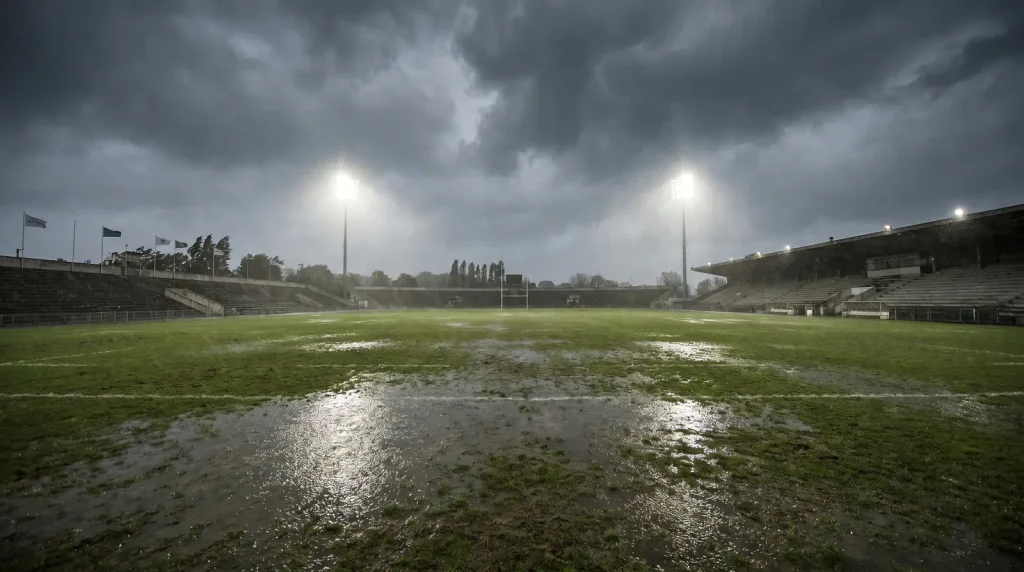
A few seasons back I lost a tries-over bet on a Welsh autumn international because I had not bothered checking the forecast. By kick-off, the rain at the Principality Stadium had turned the pitch into a kicking duel and the match finished with two tries instead of the six the over line had implied. That was the day I added “open the Met Office page before pricing any rugby bet” to my pre-match checklist. Weather is the single most underrated input in rugby betting, and the British calendar serves it up by default for half the season.
Rugby is more weather-sensitive than most ball sports. Wet conditions suppress handling and shift matches toward forwards and kicking. Strong winds turn certain attacking and kicking plays from reliable to lottery. Cold conditions affect ball grip in ways that subtle but persistent. The bookmaker prices in some of this, but never all of it, and the gap between the model’s adjustment and the actual weather effect is where the betting opportunity lives.
This guide covers why rugby is so weather-sensitive, the specific market effects of rain and wind, the broader patterns by tournament season, what to do when the forecast changes after you have already bet, and how to read venue-specific weather histories.
Why rugby is weather-sensitive
Rugby’s weather sensitivity comes from three mechanical sources. First, the ball is large and oval, which makes it harder to handle when wet than a football or cricket ball. Even small amounts of moisture significantly reduce handling accuracy. Second, the sport relies heavily on kicking from hand – restarts, territorial clearances, drop-outs, and tactical kicks – which becomes unreliable in wind. Third, the breakdown contest at the ruck depends on grip on the ball, which deteriorates rapidly in wet or cold conditions.

The cumulative effect is that wet conditions push matches toward forwards-led, set-piece-heavy contests. Backs cannot reliably handle the ball in wide channels, so attacks compress and the match becomes a kicking and breakdown battle. Tries decrease. Penalties increase. Total scoring drops.
The Six Nations 2025 produced 108 tries across fifteen matches, an average of 7.2 tries per game, but the per-match distribution was highly weather-correlated. Dry matches in the tournament averaged closer to eight tries; wet matches averaged closer to five. That two- to three-try gap is the entire difference between an over and an under on most tries totals lines.
In Premiership rugby, around 33 per cent of regular-season matches finish with a margin of one to seven points, and wet-weather matches concentrate in this margin band more heavily than dry-weather matches. The mechanism is that wet weather suppresses tries on both sides equally, narrowing the score and concentrating outcomes around small margins.
Rain effects on totals and handicap
Heavy rain is the cleanest weather signal in rugby betting. When the forecast shows sustained rain through kick-off, the under on tries totals becomes the default play. The bookmaker usually moves the line down by half to a full try ahead of confirmed bad weather, but not always far enough. A tries total of 7.5 in a forecast of heavy rain might still represent good under value if the move from the natural 8.5 line is the standard half-try adjustment.
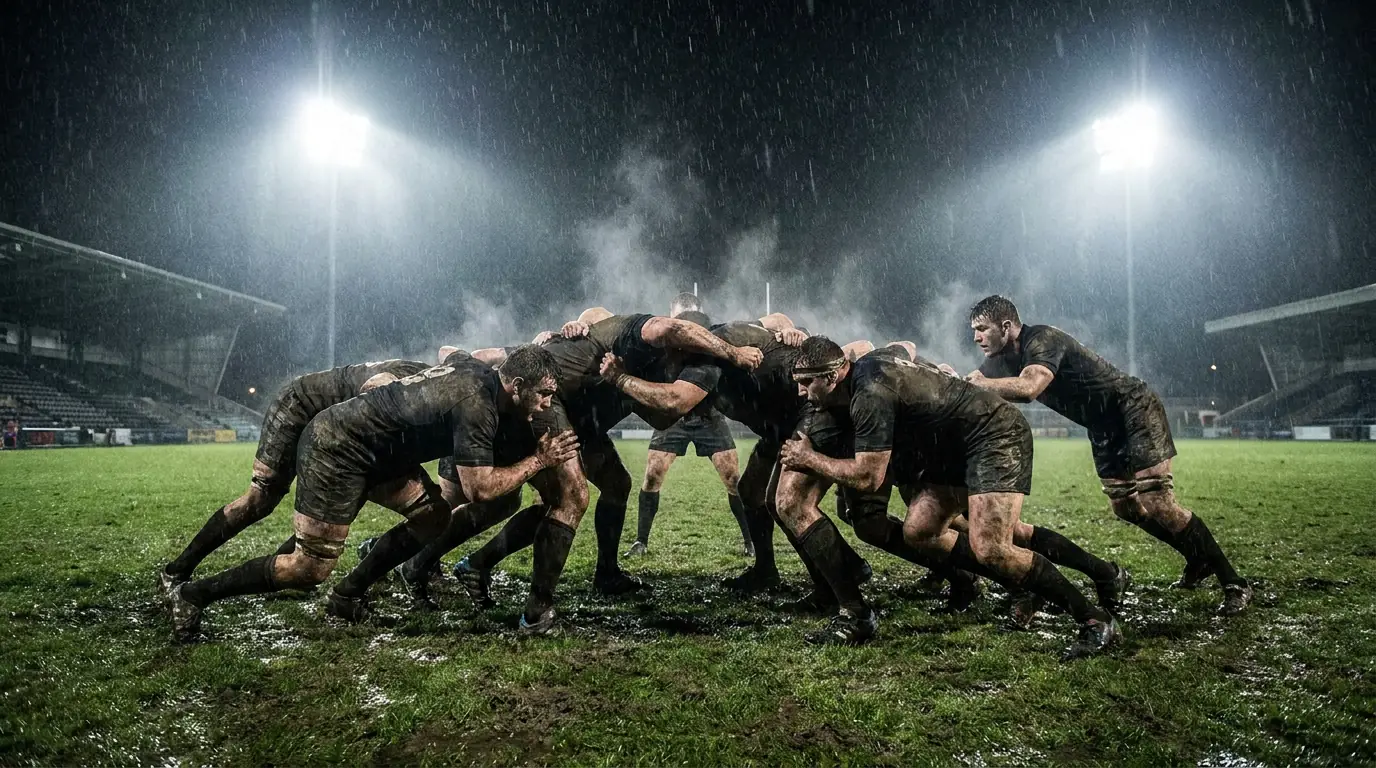
Rain also affects handicap lines, though less dramatically than totals. Wet weather tends to narrow handicap lines because the favourite’s attacking advantage is partially neutralised. A side that wins by twelve points in dry conditions might win by six in wet conditions, because both sides struggle to score and the match compresses. The bookmaker integrates this but the adjustment is rarely as large as the actual effect.
The exception is when the favourite has a structural set-piece advantage. A team with a dominant maul and pack actually benefits from wet weather because the conditions push the match toward their strengths. Backing a maul-led favourite in heavy rain has been a profitable pattern, particularly in handicap markets where the line has narrowed on conventional weather logic without accounting for the specific tactical fit.
First try scorer markets shift in wet weather. Wingers become less likely scorers because wide attacks are harder to convert; forwards become more likely scorers because close-range mauls and pick-and-go phases multiply. The shirt-number forwards band (1-8) becomes a value play in heavily wet forecasts. For the broader mechanics of how weather and handicap line readings interact, my analysis of rugby handicap betting covers the underlying line-movement principles in more depth.
Wind effects on kicking and territory
Wind is more complex than rain because it affects different aspects of play asymmetrically. Strong sustained wind helps the team kicking with it and hinders the team kicking against it. The team with the wind in their favour pins the opposition deep, contests restarts from advantageous positions, and threatens drop goals from longer range. The team against the wind struggles to clear territory and concedes attacking platforms repeatedly.

The half-by-half pattern matters. In matches with strong wind, the team kicking with the wind in the first half often builds a lead that compresses or expands depending on how they manage the second half with the wind against them. Reading the wind direction relative to which side kicks off and which side defends each end is essential for in-play betting on wind-affected matches.
Goal-kicking accuracy collapses in strong wind. A fly-half who is normally 80 per cent accurate from straight kicks at posts might drop to 50 per cent in sustained wind. That accuracy collapse reduces total points without necessarily reducing tries, which creates cross-market opportunities. Backing the under on points totals while taking the over on tries totals can work in matches where wind suppresses kicking but not running.
The Met Office’s seasonal data on UK ground-level wind speeds at major rugby venues confirms what most experienced bettors observe: Murrayfield in February averages noticeably higher wind speeds than Twickenham in March. Those venue-by-month patterns repeat year after year, and the bookmaker’s pricing does not always adjust to the structural wind exposure of specific venue-month combinations.
Tournament weather patterns
The British and Irish rugby calendar puts most major club rugby in autumn and winter and the Six Nations in the depths of February and March. That schedule means weather matters more for British rugby betting than for, say, Australian or South African rugby betting.

Specific tournament patterns recur year after year. Six Nations matches in early February at Murrayfield routinely face cold winds and occasional snow. Six Nations matches in March at Twickenham see variable conditions but more dry matches than wet. Champions Cup pool rounds in mid-December at French venues face rain and mud frequently. Premiership matches in January and February skew toward wet conditions in the north and dry conditions in the south of England.
The Met Office publishes long-range outlooks that inform pricing in the days before kick-off, but the practical value of the forecast tightens as kick-off approaches. A forecast eight days out is informative but uncertain; a forecast 48 hours out is reliable enough to bet on. A weather analyst speaking to British rugby media before a recent Six Nations campaign observed that the prevailing patterns over the British Isles in February and March produce more weather-affected rugby matches than any other elite rugby calendar in the world.
Forecast changes after you’ve already bet
Weather forecasts change. A bet placed three days before kick-off on a dry forecast becomes a different proposition when the forecast shifts to heavy rain by Friday afternoon. The question is what to do about it.

The first option is to do nothing. The forecast change has already moved the line against your bet, so the closing line value of your bet has improved (you bet at a price that no longer exists). Holding through to settlement is reasonable if the forecast change is uncertain or modest.
The second option is to hedge through a betting exchange. Taking the opposite side of your original bet at the new price locks in a known loss or profit regardless of the eventual outcome. When a tries-over bet at 1.90 has drifted to 2.20 after a wet forecast confirms, laying at 2.20 locks in profit without waiting for the match.
The choice depends on conviction and comfort with active position management. I tend to hold most weather-affected bets through to settlement, but I will hedge when the forecast change is large and the price movement extreme.
Venue-specific weather histories
Each rugby venue has a weather history that informs pricing. Murrayfield in winter is cold and windy. The Principality Stadium in Cardiff has a closing roof that eliminates weather effects when used, but is often left open in dry forecasts even when conditions are marginal. Twickenham in spring is variable. The Aviva Stadium in Dublin is sheltered but cold. French venues in early winter are usually wet.

Knowing the venue’s typical conditions for the match’s month is the baseline. The specific forecast then refines or contradicts the baseline. A “wet Murrayfield match in February” is the default; a “dry Murrayfield match in February” is the exception, and betting markets sometimes over-adjust to the unusual forecast without integrating the venue’s structural wind exposure.
The roofs matter. Both the Principality Stadium and the Tottenham Hotspur Stadium have closable roofs. Whether the roof is open or closed for the match is usually announced 48 hours before kick-off and is occasionally a market-moving event in itself. A closed-roof match removes weather as a factor and shifts the totals lines toward dry-match averages.
The most reliable practice I have developed is to track every bet alongside the actual weather conditions at kick-off. After a season of this tracking, patterns emerge: certain venue-month combinations reliably under-deliver tries; certain referees combined with certain weather conditions consistently produce penalty-heavy matches. The bookmaker’s pricing rarely integrates this level of granular pattern recognition, and the gap is where weather-aware betting earns its edge.
