
Bet Rugby UK: A Complete Guide to Markets, Odds and Strategy
 Available in US
The first afternoon I set out to bet rugby properly, I lost the thick end of fifty quid in eighty minutes because I treated a Gallagher Premiership match like a football coupon. Same blind faith in the favourite, same lazy read on the handicap, same assumption that goals and tries behave alike. They do not. Nine years on, reading these markets is how I make my living, and the single biggest gap I see in British rugby punting is not a shortage of nerve but a shortage of structure.
This guide is the structure I wish someone had handed me back then. It is a full rugby betting UK walkthrough for the beginner and the improver alike: how Union and League differ at the betting window, which tournaments reward study, how the main rugby betting markets are priced, how UK regulation shapes what you can and cannot do, and where genuine value tends to hide. I write for British readers using UKGC rugby bookmakers, in pounds, with the Six Nations, the Premiership, the Betfred Super League and the United Rugby Championship as the working backdrop.
Rugby betting does not sit in isolation. It rides on top of one of the largest regulated gambling markets on earth. British gambling produced gross gambling yield of around 4.5 billion pounds in the final quarter of 2025 alone, and roughly 3.3 billion pounds of that once you strip out the lotteries. Rugby is a slice of that pie, but it is a growing and unusually study-friendly slice, and the punters who treat it seriously tend to fare better than the ones chasing a Saturday thrill.
A word before we start. Nothing here is a tip. I am an analyst, not a tipster, and the aim is to make you a sharper, calmer bettor who understands what is actually on the screen in front of them. That is the whole of my rugby betting strategy in one sentence, and the rest of this UK rugby betting guide simply unpacks it.
The rugby betting essentials, before kick-off
- Rugby is the fifth most popular sport for British bettors, with around one in ten punters backing it, so the markets are liquid enough to take seriously yet soft enough to reward homework.
- Roughly 22.5 million UK adults have a bet each month; you are not alone, but the edge belongs to the studious minority.
- Master four ideas first: the Union and League split, handicap and totals pricing, fractional versus decimal odds, and what a value bet truly is.
- Bet only with UKGC-licensed operators, set your deposit limits before you start, and treat staking discipline as more important than any single prediction.
How big is rugby betting in Britain, really
Ask most British punters how big rugby betting is and you will get a shrug. That is a mistake, because the size of a market tells you how hard the bookmakers work on their prices, and how much room is left over for a sharp eye.
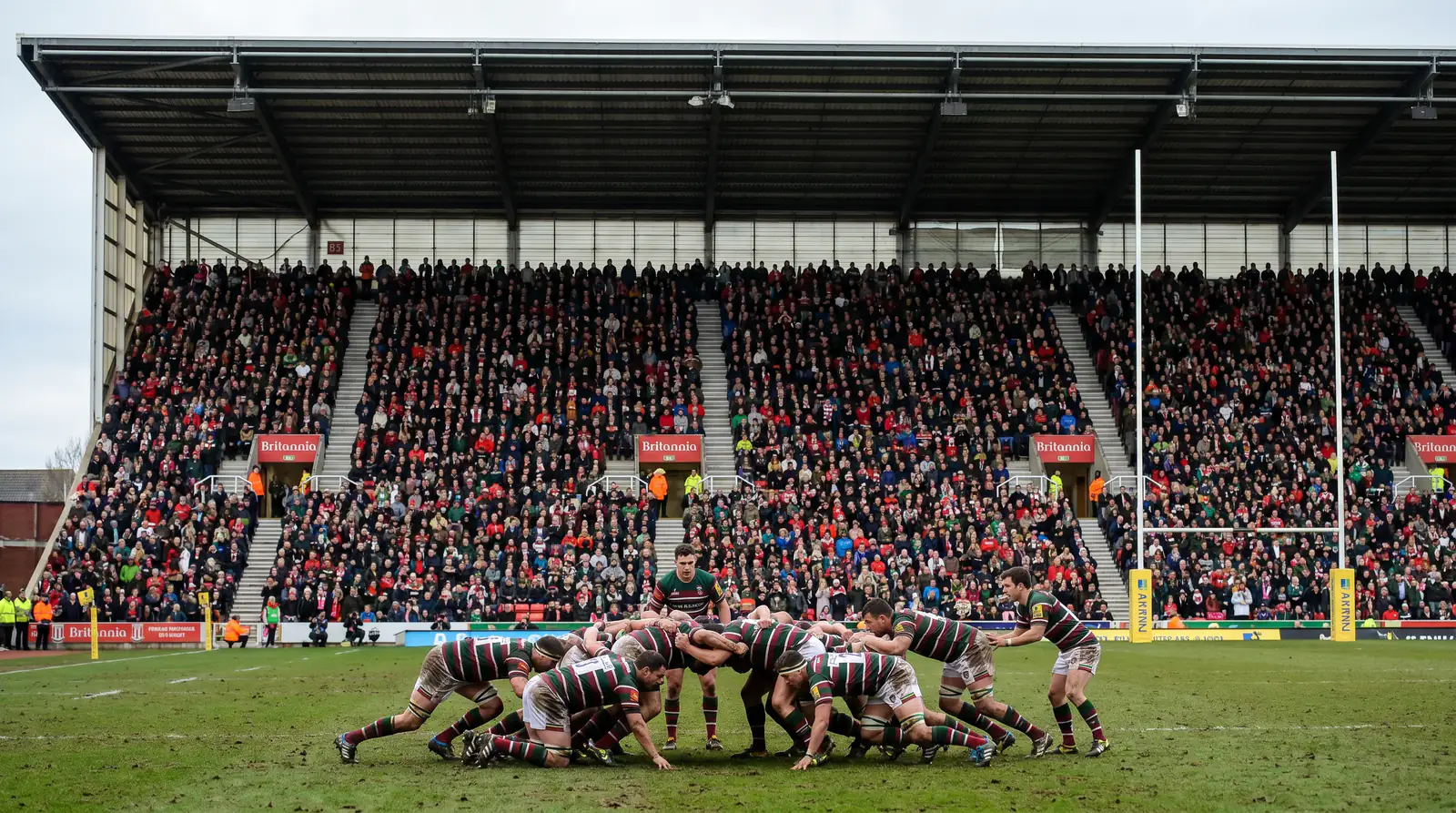
Start with the macro picture. Rugby sits inside a gambling economy that turned over gross gambling yield of about 4.5 billion pounds in the final quarter of 2025. The remote casino, betting and bingo sector alone generated around 5.55 billion pounds across the calendar year, with remote betting contributing roughly 599 million pounds in that closing quarter. On the high street, non-remote total betting produced about 622 million pounds in gross gambling yield between April and June 2025, more than half of all non-remote yield in the industry. These are not abstractions. They are the reason a Six Nations match carries dozens of priced markets while a second-tier fixture carries a handful. Money follows attention, and pricing effort follows money.
Now zoom in. Rugby is the fifth most popular sport for British bettors, and around ten per cent of all punters back it at some point. Worldwide, the rugby betting market was worth somewhere near 8.26 billion US dollars in 2025, close to five per cent of all sports betting globally, growing at a compound annual rate of just over eight per cent. That growth cuts a counterintuitive way for you: the more a market grows, the more bookmakers invest in pricing it tightly, and the more you must earn your edge through specialisation rather than sheer volume.
22.5m
UK adults betting each month
5th
Rugby's rank among British betting sports
10%
Share of UK punters who bet on rugby
$8.26bn
Estimated global rugby betting market, 2025
That figure of 22.5 million adults betting each month is the one I keep returning to, and it is the one the Betting and Gaming Council's chief executive Grainne Hurst reaches for too when she describes the people who, as she puts it, "enjoy a bet each month." It tells you the crowd is enormous and overwhelmingly casual. The casual majority is precisely what creates pricing softness on a niche like rugby, because bookmakers shade their lines towards public money and gut instinct rather than cold probability.
Why rugby's size works in your favour
Football dwarfs rugby in turnover, which means bookmakers pour their sharpest modelling into football and lean on lighter, more formulaic pricing for rugby's deeper markets. The first-try-scorer board, the winning-margin bands and the in-play props are where that thinner attention shows up most. You will rarely out-think a Premier League market. You can, with work, out-think a Premiership one.
So what does this mean before your next bet? Two things. First, rugby is liquid enough that you will get matched on sensible stakes across all the major tournaments, so you are not fighting empty markets. Second, it is soft enough in its secondary markets that disciplined study genuinely pays. Everything that follows is built around that single insight: rugby rewards the punter who specialises. Before you can specialise, though, you need to know which game you are even watching, because in Britain there are two of them.
Two codes, two very different bets
Here is the question that quietly separates the rugby bettor from the rugby tourist: how many points is a try worth? If you answered without first asking which code, you have already leaked money you will never spot on a statement. Britain plays two rugbies, and they price differently because they score differently.
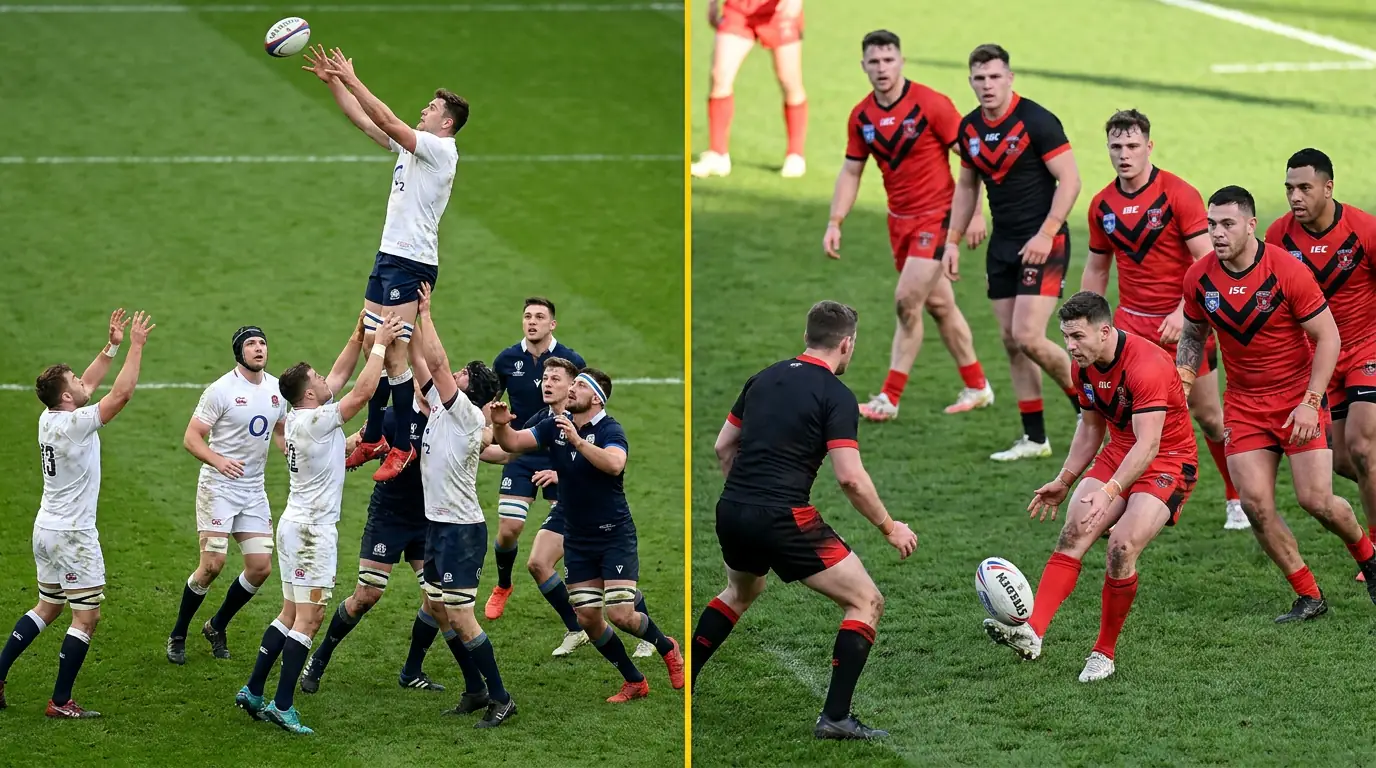
Try — the act of grounding the ball over the opposition's goal line. It is worth five points in Rugby Union and four in Rugby League, and that single-point gap ripples through every totals and margin market you will ever touch.
Conversion — the kick at goal awarded after a try, taken from a spot in line with where the try was scored. It is worth two points in both codes, but the lower base value of a League try changes how often a converted score swings a tight game.
Rugby Union is the fifteen-a-side game of the Six Nations, the Gallagher Premiership, the United Rugby Championship and the Rugby World Cup. Rugby League is the thirteen-a-side game of the Betfred Super League and the Challenge Cup. They share an ancestor and almost nothing else at the betting window. League is faster, built around its set of six tackles, and tends to produce higher, steadier scoring. Union is more variable, more dependent on the set piece and the breakdown, and far more prone to low-scoring arm-wrestles in foul weather.
| Feature | Rugby Union | Rugby League |
|---|---|---|
| Players per side | 15 | 13 |
| Try value | 5 points | 4 points |
| Possession structure | Contested ruck, open turnover | Six-tackle set, then handover |
| Typical scoring | Variable, set-piece driven | Higher, more rhythmic |
| Flagship UK competitions | Six Nations, Premiership, URC | Super League, Challenge Cup |
| Bettor implication | Wider totals range, weather-sensitive | Tighter totals, momentum-driven |
The popularity gap explains the market gap. Around 223,000 people played Rugby Union in England in 2023, a four-year high, against roughly 50,000 in Rugby League. More players and more clubs mean more eyeballs, more data and, crucially, more priced markets. Union typically hands you a broader board and deeper liquidity. League rewards the specialist who understands how its scoring rhythm compresses the range of plausible results. You do not need to master both. You do need to know which one you are betting, every single time.
The British rugby calendar worth betting
I keep a simple rule taped above my desk: bet the tournaments you would watch even with nothing riding on them. Familiarity is an edge in itself, and the British rugby calendar gives you six events worth knowing intimately. Treat them as your specialist subjects rather than a buffet to graze.
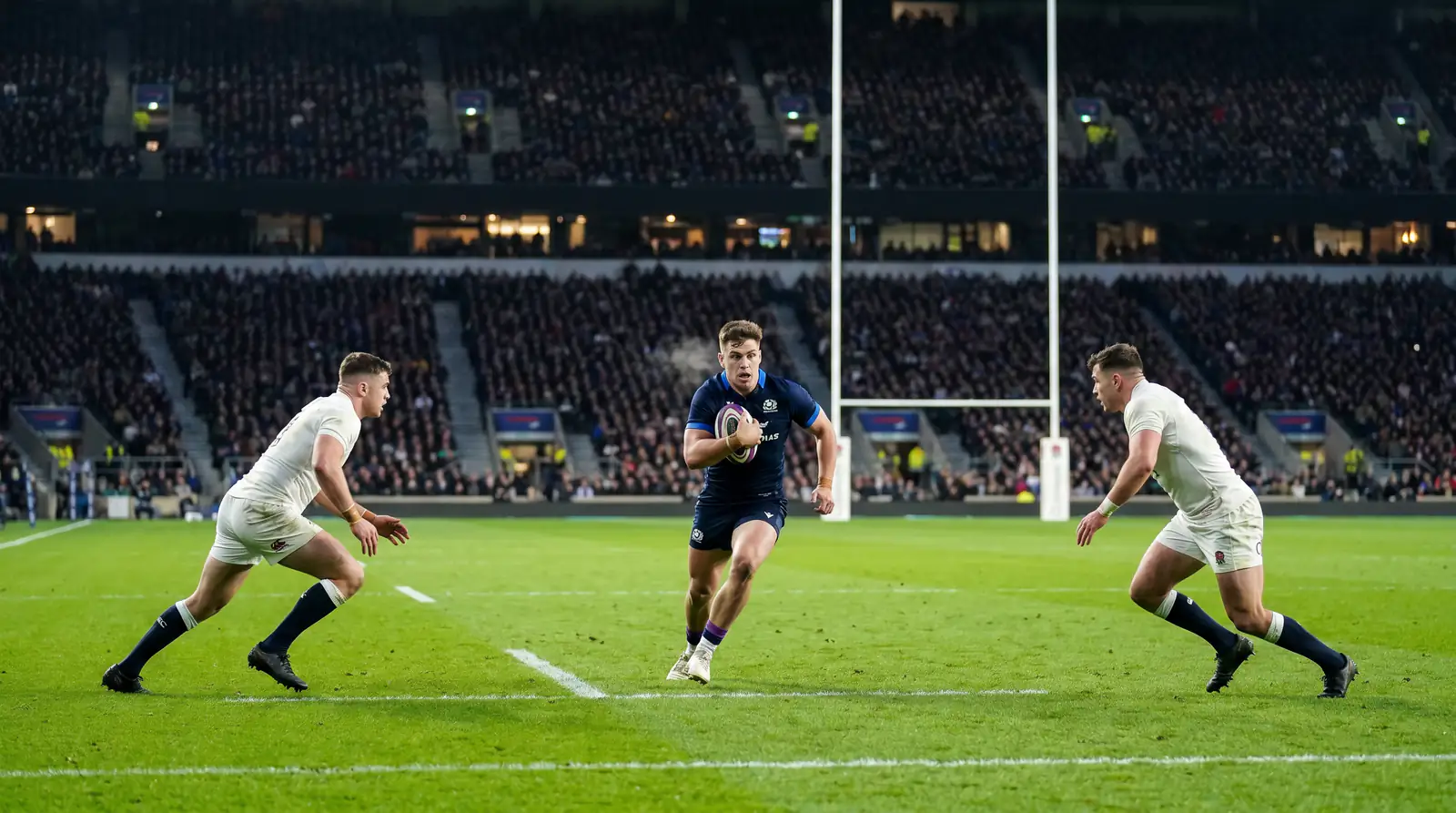
Guinness Six Nations
The jewel of the Northern Hemisphere season. The 2025 edition drew a total attendance of 1,050,465 across 15 matches, an average just above 70,000 a game, with 108 tries scored at 7.2 per match. The dense fixture list and rich historical record make it the most study-friendly Union competition there is. My full Six Nations betting guide goes far deeper on outright pricing, handicaps and venue trends.
Gallagher Premiership
England's top club competition and a bettor's favourite for sheer volume of games. The 2025 final between Bath and Leicester pulled a record average television audience of 973,000, peaking on a cumulative basis at 1.26 million. Week-in, week-out repetition is what lets you build genuine form models, which is the whole point of my Gallagher Premiership betting breakdown.
Betfred Super League
The top tier of British Rugby League. The 2025 regular season pulled a total attendance of 1,698,022, the first time the average cleared 10,000 a match. Its 4-2-1 scoring and relentless pace make it a different animal entirely, which is exactly why a dedicated Betfred Super League betting guide earns its place.
United Rugby Championship
The URC spans Ireland, Wales, Scotland, Italy and South Africa, a sprawl that creates real travel and weather angles. Its 2025/26 season drew 1,620,340 spectators at nearly 11,000 a match, peaking at 53,682 for Stormers against Bulls. The geographic spread is the edge: long-haul trips quietly distort away pricing.
Rugby World Cup 2027
The sport's global summit. The 2027 tournament in Australia expands from 20 to 24 teams, six pools of four, 52 matches and a brand-new Round of 16. A reshaped structure means the historical futures models need rebuilding from scratch, which is the heart of my Rugby World Cup 2027 betting analysis.
British and Irish Lions
Rugby's rarest betting event, a series staged only once every four years. Because four nations' players combine into a single side, the usual form book scrambles, and that uncertainty is what makes the series winner and tour-match markets so volatile and so interesting.
70,031
Average Six Nations 2025 attendance per match
1.26m
Peak audience, 2025 Premiership final
52
Matches at the expanded 2027 Rugby World Cup
53,682
Record URC crowd, 2025/26
The temptation, especially early on, is to bet everything. Resist it. The bettor who knows one club competition cold will reliably beat the bettor who dabbles across six. Pick the calendar that fits your life. If your Saturdays already revolve around the Premiership, build there. If you grew up on League in the north, Super League is your edge, not your hobby. The point of mapping the whole landscape is not to play all of it, but to choose the corner where your existing knowledge is worth real money. With your tournament chosen, the next job is to understand the markets it offers.
The rugby betting markets you will actually use
If you only ever learn three rugby markets, learn the match result, the handicap and the totals. Everything else is decoration on those three. Roughly six in ten of all rugby bets worldwide land on just the match outcome and the margin, which tells you where the bookmakers concentrate their pricing and where you should concentrate your attention.

The match result is the obvious starting point. In Union you will often see three outcomes priced, including the draw, because draws are rare but real. In League the draw is rarer still. The trap for newcomers is backing a heavy favourite at a price that offers no value at all, simply because they expect that team to win. Expecting a team to win and getting paid fairly to back them are two entirely different things.
Handicap — a points start applied to one team before kick-off to level an uneven contest. A favourite at minus 7.5 must win by eight or more for the bet to land; the underdog at plus 7.5 covers if they lose by seven or fewer, or win outright.
The handicap is where rugby betting starts to get interesting, because it turns a mismatch into a coin-flip and rewards you for reading how a game will actually unfold rather than who will simply win. The full mechanics of reading a line deserve their own study, but at this level the principle is enough: the handicap asks not who wins, but by how much.
Totals — a market on the combined score, or sometimes the combined tries, finishing over or under a line the bookmaker sets. A total points line of 45.5 pays "over" at 46 or more, and "under" at 45 or fewer.
First try scorer — a bet on which named player crosses for the opening try. Wingers and outside backs dominate the shortest prices because they finish most of the moves; forwards drift longer and occasionally hide value at the set piece.
To make the result market concrete, allow me a brand-free, illustrative example. Suppose a bookmaker prices a match like this:
| Outcome | Decimal | Fractional |
|---|---|---|
| Home win | 1.80 | 4/5 |
| Draw | 21.00 | 20/1 |
| Away win | 2.10 | 11/10 |
Read that grid and you can already see the bookmaker's verdict: the home side are clear but far from certain favourites, the away side are live, and the draw is a near-impossibility being priced mostly to round out the book. The skill is not in reading the favourite. It is in deciding whether 11/10 about the away side is generous or mean given what you know about form, travel and team news.
About a third of Gallagher Premiership matches finish within a single converted score, which is exactly why the handicap and winning-margin markets reward patience over bravado.
That tightness is the bettor's friend and enemy at once. When 33 per cent of matches in a major competition land inside seven points, the handicap line becomes a genuine battleground, and a half-point either way carries real money. Beyond these staples sit the specials: try scorers, half-time and full-time doubles, winning margins, and the accumulator boards that string several selections together for a bigger return at longer odds. Specials are where rugby's softer pricing lives, and where a patient, knowledgeable punter does their best work. But you earn the right to play them only once the three core markets are second nature.
Reading fractional and decimal odds without losing money
Walk into any British betting shop and you will see fractions on the wall. Open most modern apps and you can flick a switch to decimals. The format does not change your payout, but misreading it absolutely changes your bankroll, and I have watched more than one sharp newcomer talk themselves into a bad bet because 7/2 looked bigger in their head than 4.50 felt.
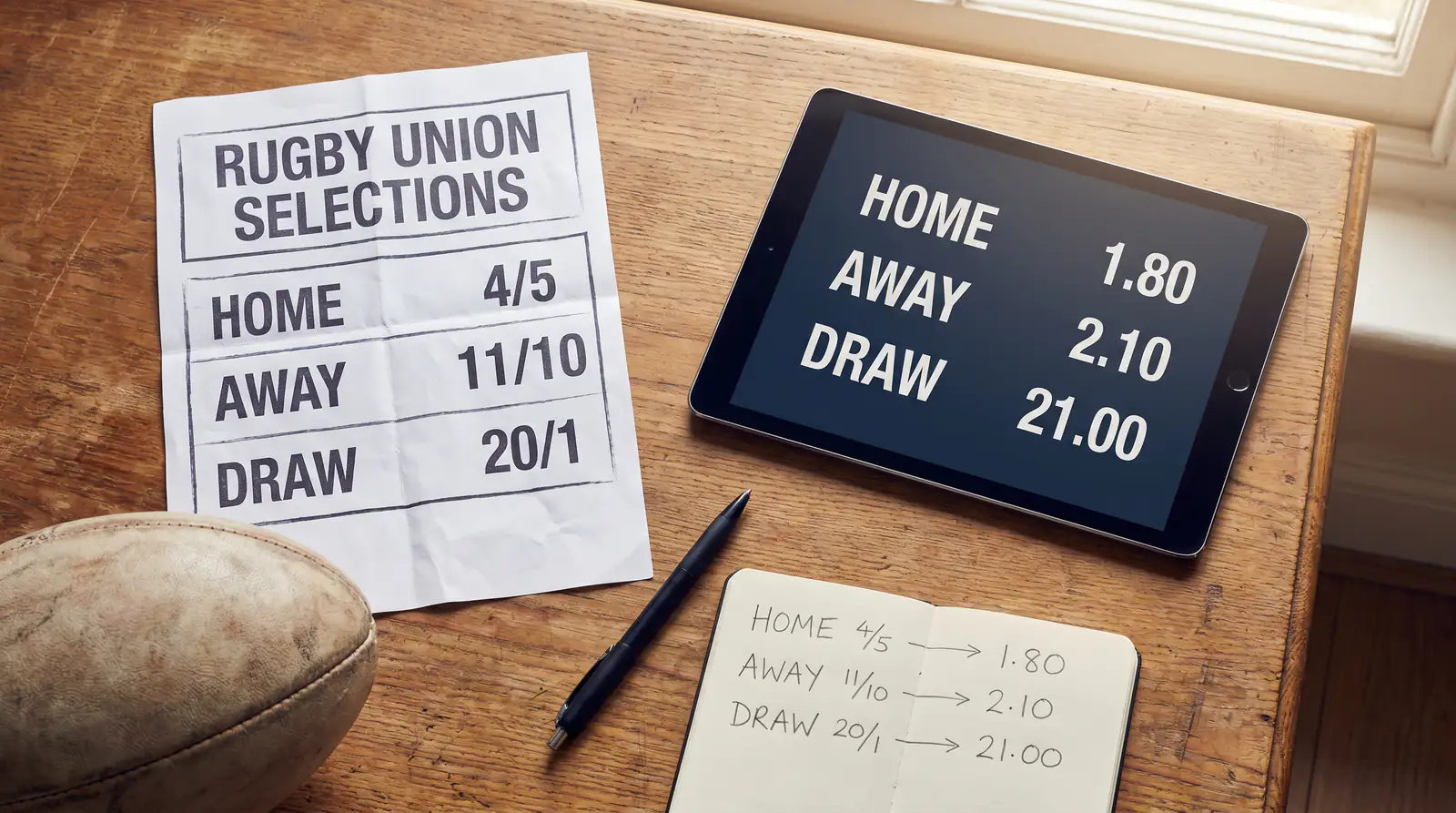
Fractional odds tell you the profit relative to your stake: 4/1 returns four pounds of profit for every one staked, plus your stake back. Decimal odds tell you the total return including your stake: 5.00 returns five pounds for every one, which is the same thing expressed differently. The genuinely useful third lens is implied probability, the bookmaker's stated chance of the outcome, because that is the number you will compare your own judgement against.
| Fractional | Decimal | Implied probability |
|---|---|---|
| 1/2 | 1.50 | 66.7% |
| Evens (1/1) | 2.00 | 50.0% |
| 9/4 | 3.25 | 30.8% |
| 7/2 | 4.50 | 22.2% |
Turning a fraction into a probability
Take a Rugby World Cup outright priced at 9/4.
Step one: convert to decimal. Divide 9 by 4 to get 2.25, then add 1 for your returned stake, giving 3.25.
Step two: convert to implied probability. Divide 1 by 3.25, which is 0.308, or about 30.8 per cent.
That figure is the bookmaker's stated chance of the result. If your own honest estimate sits above 30.8 per cent, you may have value. If it sits below, you walk away.
Get comfortable flipping between all three and you stop being at the mercy of presentation. The bookmaker can dress a price up in whichever format flatters it; you will always be able to strip it back to the only question that matters, which is the chance the outcome actually happens.
How UK regulation shapes your rugby bet
The most reassuring sentence I can write about British rugby betting is this: if your bookmaker holds a UK Gambling Commission licence, you are playing inside one of the most heavily policed gambling regimes on earth. The most expensive mistake you can make is assuming an unlicensed offshore site offers you the same protection. It does not, and no welcome bonus is worth that gap.

What a UKGC licence actually guarantees
A Gambling Commission licence obliges an operator to verify your identity and age, ring-fence customer funds, offer deposit limits and self-exclusion tools, and submit to audits on fairness and anti-money-laundering controls. The ten largest operators account for around 77 per cent of the market's gross gambling yield, so most licensed names you will meet are large, heavily scrutinised businesses. The licence is the floor, not an endorsement of any single brand.
Two regulatory shifts define rugby betting in 2026, and both arrived recently enough that most guides still ignore them. The first is fiscal. From April 2026, Remote Gaming Duty rose to 40 per cent, nearly double the previous 21 per cent. You will not pay that tax directly, but operators do not absorb cost increases out of charity. Expect it to surface gradually in marginally tighter prices, leaner promotions and fewer of the generous free-bet offers that defined the previous decade.
RFU Regulation 17 and why it protects your bet
Since 1 August 2025, RFU Regulation 17 has banned players and other participants at international and contracted-player level from betting on rugby. It is an anti-corruption measure, not a restriction on you, and it exists to keep the markets you bet honest. The more the people inside the game are walled off from wagering on it, the more confidence you can have that a sudden line move reflects genuine information rather than something rotten.
The second shift is advertising. The Betting and Gaming Council's seventh-edition code, in force since March 2025, holds operators to a whistle-to-whistle advertising ban before 9pm around live sport and requires that a fifth of all advertising carry responsible-gambling messaging. For a rugby bettor that means fewer in-broadcast prompts nudging you towards an impulsive in-play punt, which is no bad thing for your discipline.
I will not pretend the fine detail of these rules is light reading, and the full mechanics belong in dedicated pieces rather than this overview. What matters here is the principle. Bet only with licensed operators, understand that the tax and advertising landscape is tightening through 2026, and treat regulation as a safety rail rather than a buzzkill. It is the framework that makes everything else in this guide possible.
Judging a rugby bookmaker on what matters
I get asked "which bookmaker is best for rugby?" more than any other question, and my honest answer disappoints people: there is no single best, only the best for a given market on a given day. So instead of chasing a name, learn to judge an operator on what actually moves your returns.

The thing that quietly matters most is line-shopping. Because a handful of operators dominate the market, prices cluster, and when one big book moves a rugby line the others tend to follow within minutes. Holding several licensed accounts lets you take the best available number before that lag closes, and over a season the difference between always taking the top price and always taking an average one is the difference between profit and break-even.
Before you open an account, confirm:
- The operator holds a current UK Gambling Commission licence, displayed in the site footer.
- It prices the rugby tournaments you actually follow, not only the headline ones.
- Its deposit limits, time-outs and self-exclusion tools are easy to find and set.
- Withdrawal terms and timescales are stated plainly, not buried inside a promotion.
- Live streaming or in-play coverage exists for the competitions you want to trade.
Do
- Hold accounts with several licensed books so you can always take the best available price.
- Read the small print on free bets before you stake a penny to qualify.
- Judge an operator on rugby market depth, not on the size of its welcome banner.
Don't
- Pick a bookmaker because a "top ten" list told you to; those lists rarely reflect rugby pricing.
- Chase an offshore site promising better odds outside the UK licensing regime.
- Let a sign-up bonus decide where your serious money lives.
The honest truth is that the bookmaker is a tool, not a teammate. Choose the ones whose prices and coverage suit your tournaments, treat the offers with healthy suspicion, and remember that the best operator for a Super League totals bet may not be the best for a Six Nations outright. Flexibility beats loyalty every time.
Finding value, the only edge that lasts
Value is the only word in betting that truly matters, and it is the one most punters never properly define. A value bet is not a winner. It is a bet where your honest estimate of the chance is better than the price on offer, win or lose. Get that distinction wrong and you will celebrate lucky losers and curse unlucky winners for the rest of your betting life.

The mechanism is simple once you have the implied-probability habit from earlier. Strip every price back to the chance it represents, form your own independent view of that chance, and bet only when your number is higher than the bookmaker's. Do that consistently and the maths takes care of itself across a large enough sample. Do it sporadically, on a hunch, and variance will eat you alive.
Is there value in this price?
Suppose a bookmaker offers 2.10, or 11/10, on a home side to win a Premiership match.
Step one: the implied probability is 1 divided by 2.10, or about 47.6 per cent.
Step two: from your own study of form, venue and team news, you rate the home side a genuine 55 per cent chance.
Step three: because 55 per cent comfortably exceeds 47.6 per cent, the price holds value. Over many such bets, backing prices like this is how an edge compounds.
Had your estimate come in below 47.6 per cent, the correct move would be no bet at all.
The reassuring part is that rugby value is real and measurable, not a fantasy. When the independent reviewers at the Smart Betting Club assessed a rugby tipping service that had, in their words, delivered "outstanding results," the headline was a 10.54 per cent return on investment across 485 rugby bets over twelve months. That is a serious, documented edge in a sport most punters treat as a coin toss.
Models are closing in on the bookmakers too. One rugby prediction system posted an average error of under six points a match across all 48 games of the 2023 Rugby World Cup, sharper than the typical bookmaker forecast. The lesson is not that you should build a neural network this weekend. It is that disciplined, evidence-led rugby betting genuinely clears a profit when it is done patiently and without ego. Value is slow, unglamorous and utterly reliable, which is exactly why so few people stick with it.
Betting live without handing back your edge
The most dangerous seven seconds in betting are the ones between something happening on the pitch and that something reaching your screen. In-play rugby betting is thrilling, fast and, for the unprepared, a quiet way to gift the bookmaker your edge.
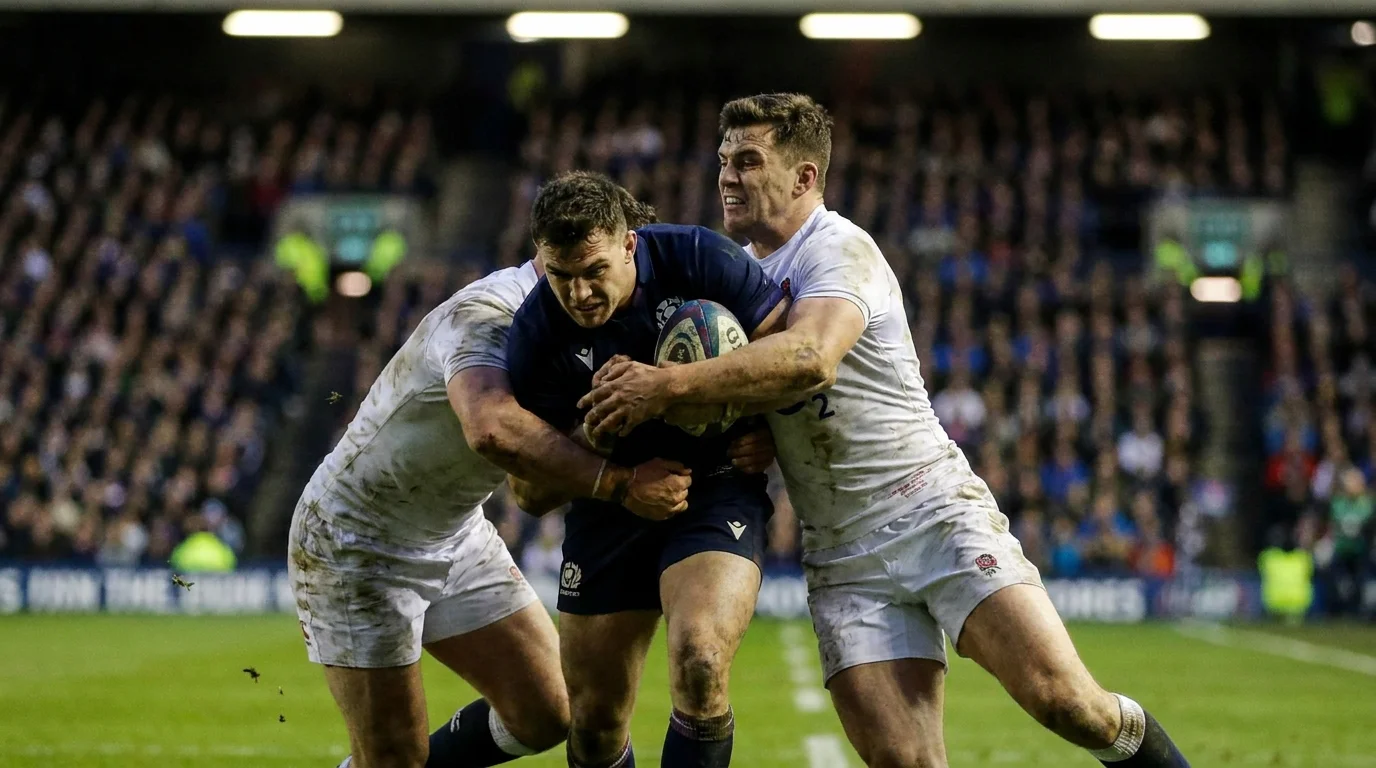
Live betting has exploded for a reason. Live, in-play wagering now makes up close to 45 per cent of all sports betting volume, and the markets reprice continuously as tries, cards and momentum swings land. Done well, it lets you act on information a pre-match bettor never had. Done badly, it turns a calm punter into a button-masher.
The latency trap
Live streams run roughly seven to ten seconds behind real time. The bookmaker's traders work off the official live data feed, not your delayed picture, so when you see a line break and lunge for a price, the market has usually already moved on what you are only now watching. Treat anything you bet purely on a live stream as information you are receiving late, and price that delay into every decision.
Around 70 per cent of bets are now struck on mobile, which puts a fast, complex, continuously repricing market in your pocket at exactly the moments you are least calm.
My blunt advice for the in-play newcomer is to watch far more than you bet, and to decide your triggers before kick-off rather than in the heat of a comeback. There is far more to this than a single chapter can hold, and my dedicated guide to live in-play rugby betting strategy covers the specific moments that genuinely move a line and how to trade them without being burned by the lag.
Staying in the game for the long run
I will say the unglamorous thing plainly, because nine years in this trade have taught me it is the only part that truly matters: the goal is to still be betting, calmly and within your means, in ten years' time. Everything else in this guide is worthless if you cannot manage that.

The pressure working against you is industrial in scale. British operators spend in the region of 1.5 billion pounds a year on advertising and marketing, all of it engineered to keep you betting more often than you intended. When researchers at Bristol's Hub for Gambling Harms counted gambling messages across a single Premier League opening weekend in 2025, they reached 27,440 across four channels, and the academic leading that work, Dr Raffaello Rossi, did not soften his verdict: in his assessment, "self-regulation has failed." You are not imagining the saturation. You are swimming against it.
Set your limits before you ever place a bet
The single most effective thing you can do is decide your deposit and loss limits while you are calm, then lock them in. A limit set in advance protects you from the version of yourself that is chasing a loss at full time.
Do
- Bet only with money you can comfortably lose, set aside in advance.
- Keep a record of stakes and results so you see the real picture, not just the highlights.
- Take regular breaks, especially after a big win or a painful loss.
Don't
- Chase losses by raising stakes to "win it back" in one bet.
- Bet to escape stress, boredom or a low mood.
- Treat in-play markets as a way to stay in the action when you had planned to stop.
Where to get help
Every UKGC-licensed operator must offer deposit limits, time-outs and self-exclusion. GamStop lets you exclude yourself from all licensed British online operators at once. GambleAware and the National Gambling Helpline provide free, confidential support if betting stops feeling like a choice. Reaching for these tools is the mark of a disciplined bettor, not a defeated one.
Profit in this sport is a marathon, not a sprint, and the discipline that protects your wellbeing is the same discipline that protects your bankroll. Look after the first and the second tends to follow.
Rugby betting questions I get asked most
What's the difference between betting on Rugby Union and Rugby League?
The codes score and flow differently, and that changes the maths. Union is fifteen-a-side with a five-point try; League is thirteen-a-side with a four-point try and a structured six-tackle set. League tends to produce higher, steadier scoring, so its totals lines sit higher and tighter. Union is more variable and weather-sensitive, with a wider plausible range of results. Union also offers more priced markets in the UK because more people play and follow it.
Is online rugby betting legal in the UK?
Yes, provided you are 18 or over and bet with an operator holding a UK Gambling Commission licence. Licensed operators must verify your age and identity, protect your funds and offer responsible-gambling tools. The risk lies in unlicensed offshore sites, which fall outside this regime and offer none of those protections. Always confirm the licence in the site footer before you deposit, and treat any site dodging UK rules as a hard no.
What are the most popular rugby betting markets?
The match result, the handicap and the totals do the heavy lifting; the match outcome and the margin together account for roughly six in ten rugby bets. After those come the specials: first try scorer, winning margin, half-time and full-time doubles, and accumulators. The staples are where liquidity and tight pricing live. The specials are where rugby's softer, more formulaic pricing hides value for a patient bettor who has mastered the core three first.
Which tournaments are best for rugby betting?
The best tournament is the one you already follow closely, because familiarity is a genuine edge. For most British bettors that means the Six Nations, the Gallagher Premiership, the Betfred Super League or the United Rugby Championship, with the Rugby World Cup and the British and Irish Lions tour as marquee occasions. All carry deep, liquid markets. Rather than spreading yourself thin across every competition, pick one corner and learn it well enough to beat the dabblers.
What's a "value bet" in rugby and how do I spot one?
A value bet is one where your honest estimate of the chance is higher than the chance implied by the price, regardless of whether it wins. To spot one, convert the odds to implied probability, form your own independent view of the true chance, and bet only when your number exceeds the bookmaker's. Documented rugby tipping records show real, measurable edges exist, but value only pays out over a large sample, never on a single result.
How does rugby handicap betting work?
A handicap applies a points start to one team before kick-off to level an uneven match. A favourite at minus 7.5 must win by eight or more for your bet to land; the underdog at plus 7.5 wins if they lose by seven or fewer, or win outright. It turns a one-sided contest into a near coin-flip, rewarding you for judging the margin rather than just the winner. With around a third of top-flight matches decided inside seven points, the line is a real battleground.
Can I bet live (in-play) on rugby matches in the UK?
Yes, in-play betting on rugby is widely available at UKGC-licensed operators and now makes up close to 45 per cent of all sports betting volume. The catch is latency: live streams run roughly seven to ten seconds behind the bookmaker's data feed, so a price you lunge at has often already moved on what you are only now seeing. Decide your triggers before kick-off, watch more than you bet, and never chase the action.
