
Grand Slam Six Nations Betting: Pricing the Five-from-Five Outcome
 Available in US
Pre-tournament Grand Slam bets are the romantic stake of the Six Nations calendar. You back a side at 6/1 or 8/1 in late January, watch the tournament unfold, and either tear up the slip after Round 1 or carry it through five increasingly heart-stopping Saturdays. I have done both ends of that experience often enough to know that the Grand Slam market is one where the maths is well understood by bookmakers but consistently underappreciated by punters.
A Grand Slam requires a side to win all five Six Nations matches in a single tournament. That is a remarkably specific outcome. The probability of it happening for any given side is low even when that side is genuinely the championship favourite, and the market prices reflect this. The interesting question for the bettor is not whether the prices are roughly fair (they usually are) but where the small mispricings hide.
This guide covers how often Grand Slams happen in the modern era, how their prices should relate to outright championship odds, how survival probability evolves round by round, what weather and travel add to the calculation, and how to trade a live Grand Slam attempt on the final weekend.
Grand Slam historical frequency
In the modern Six Nations (since 2000), Grand Slams have happened in roughly a quarter to a third of tournaments depending on the cut-off years you use. That hit rate is enough that you cannot dismiss the Grand Slam as too rare to back, but it is rare enough that even the strongest pre-tournament favourite is usually priced no shorter than around 5/2 or 3/1 because of the cumulative variance of five matches.

The list of teams that have completed Grand Slams in the modern era is short. France, Wales, Ireland, and England have all done it within the last decade. Scotland and Italy have not. The pricing reflects this empirical pattern: Scotland and Italy are quoted at long odds for Grand Slams even when their form would suggest a championship is plausible, because the bookmaker is pricing in the systemic difficulty of five wins from five for those sides specifically.
The Six Nations 2025 produced 108 tries across fifteen matches at 7.2 tries per game, but Grand Slam-attempt matches in the final two rounds historically run lower-scoring than the championship average. The pressure of an undefeated record changes how sides play: they kick for territory rather than counter-attacking, they defend their own twenty-two with more conservatism, and the tries-per-match averages tend to drop accordingly.
For the bettor, this means a pre-tournament Grand Slam bet should not be modelled as “championship-winner price x 1.something” but as a structurally different probability that needs its own calculation.
Relation to outright championship odds
The relationship between Grand Slam and championship outright prices follows a clean rule: Grand Slam probability is always lower than or equal to championship probability for the same team, because every Grand Slam path is also a championship path but not every championship path is a Grand Slam path. The market should reflect this with shorter prices on the championship than on the Grand Slam for the same side.

The ratio between the two prices reveals what the bookmaker thinks about your side’s specific path. If England are priced 6/4 for the championship and 4/1 for the Grand Slam, the implied probability ratio is roughly 40 per cent (championship) to 20 per cent (Grand Slam) – meaning the bookmaker thinks there is a 20 per cent chance England wins all five but a 40 per cent chance they win the championship overall, which leaves 20 per cent for “wins the championship without a Grand Slam”.
If those numbers feel off – say the Grand Slam price looks short relative to championship price – the bookmaker may be over-pricing one side’s clean-sweep capability. That can happen when public sentiment runs hot on a team after a good autumn series and the bookmaker accommodates the demand. Conversely, when a side has had a difficult autumn and the public is cool on them, the Grand Slam price often looks generously long even when the bookmaker’s championship price gives the side a real shot.
The deeper question of how to read the championship outright market across the full tournament is covered in my broader Six Nations betting guide, which walks through how the various tournament-level markets interact across the five rounds.
Round-by-round Grand Slam survival
The probability of a Grand Slam evolves dramatically as the tournament progresses. Before Round 1, the side has five matches to negotiate. After a Round 1 win, four matches remain, and the conditional probability of completing the Grand Slam from there is meaningfully higher than the pre-tournament price implied. After Round 2, three matches remain and the in-tournament Grand Slam price has typically halved from the pre-tournament price.

Each successive win re-prices the Grand Slam in the bookmaker’s favour relative to the pre-tournament number, but also in the bettor’s favour if they got in early. A Grand Slam taken at 8/1 pre-tournament will, after three consecutive wins, often sit at 6/4 or shorter in-tournament – meaning the original ticket has appreciated dramatically and could be hedged.
The Round 3 to Round 4 window is the most volatile. By that point, the bookmaker has to balance the conditional probability of two more wins with the specific identity of the remaining opponents. A side with France away in Round 4 has a different remaining path than a side with Italy at home in Round 4, even though both sides are 3-0 going in. The market prices these correctly, but the public often does not recognise the difference.
If a Grand Slam contender loses in Round 4, the Grand Slam bet is dead but the championship may still be alive. Knowing how to separate the two outcomes mentally – and ideally how to have structured your pre-tournament position with both possibilities in mind – is part of the discipline of long-form Six Nations betting.
Weather and travel friction
Weather affects every Six Nations match but it affects Grand Slam-attempt matches more sharply than ordinary fixtures. The reason is partly tactical (the attacking side becomes more conservative) and partly physical (wet conditions favour the underdog because they suppress the better attacking team’s structural advantages).
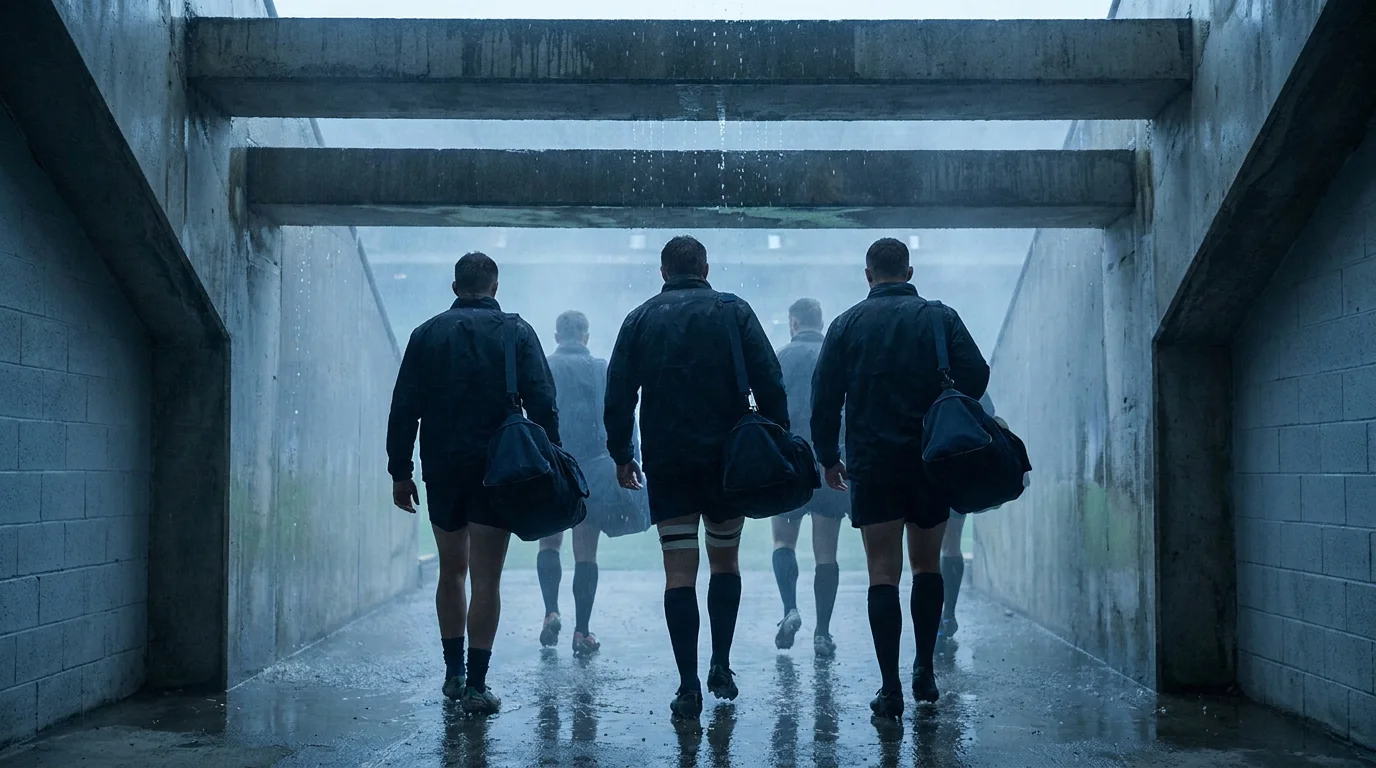
Away fixtures within a Grand Slam path carry extra weight. Travel to Dublin, Edinburgh, Cardiff, Rome, or Paris involves not just the physical journey but the psychological burden of carrying an undefeated record into a hostile environment. The bookmaker prices in some of this; the public often underweights it, particularly in the away venues where the home record is unusually strong.
The Six Nations England-France 2025 match drew a peak of 6 million viewers on ITV1 with an average of 4.3 million, illustrating the scale of public attention on the marquee fixtures. That attention translates into pre-match betting volume, which compresses match-winner prices but leaves Grand Slam-related futures markets less efficiently priced.
Live Grand Slam trading on the final weekend
Super Saturday is the most active in-play Grand Slam trading window of the year. If a side enters Round 5 with a Grand Slam still alive, the live price on the Grand Slam will move with every score and every key moment in their final match. This is the easiest place to either lock in profit on a winning pre-tournament position or capitulate on a losing one.

The decision to cash out, hedge, or hold depends on your conviction in the team’s likelihood of winning the final match and on how much edge you believed your original price offered. A pre-tournament 8/1 bet that is now in-play at 4/5 has appreciated tenfold in implied probability. Cashing out lets you bank that appreciation. Holding lets you double again if the side wins.
The practical hedge approach is to back the opposing side in the final match for an amount that, combined with your original Grand Slam ticket, guarantees a profit in either outcome. The maths depends on the live prices and your original stake, but the principle is straightforward: lock in a positive return rather than risking the whole position on eighty more minutes of uncertain rugby.
My final piece of advice on Grand Slam trading: do not chase a losing position by hedging too late. Once your contender concedes a try that effectively closes their chance of winning the final match, the hedge prices will have moved against you and the maths will rarely work. Decide your hedging plan before the match starts, not in the third quarter.
