
First Try Scorer Betting in Rugby: How the Market Prices Wingers, Forwards and Set-Piece Scores
 Available in US
I lost a first try scorer bet in the seventh minute of a Six Nations match a few years ago because a tighthead prop I had never seriously considered picked the ball up from the back of a five-metre scrum and crashed over. The winger I had backed at 12/1 was still warming his hands up. That moment taught me more about this market than any spreadsheet ever did. First try scorer looks like a fun, low-stakes punt, but pricing it properly is a serious exercise in geometry, set-piece patterns, and squad rotation.
The market is one of the most popular ancillary bets in UK rugby. It draws in casual bettors with the long odds and frustrates serious ones who do not respect what they are actually wagering on. The bookmaker is not asking you to predict who will score tries. They are asking you to predict who will score the first one in a window of roughly forty unpredictable minutes against opposition equally trying to score themselves.
What follows is everything I have learned about how the prices are built, why wingers anchor the top of the board, where forwards offer real value, and what to check the night before kick-off.
How bookmakers price first try scorer
The pricing process starts with a base probability that each player will score a try at any point in the match, derived from historical scoring rate at their position, recent form, opposition defensive numbers, and venue. That base is then adjusted for the probability that their score will be the first one, which depends on the player’s typical scoring patterns and the expected pace of the match.

Bookmakers then layer in market-side considerations. Famous names get shorter prices than their pure scoring probability would suggest, because public money flows toward recognisable players. Bench forwards get longer prices than their statistical likelihood, because most punters do not bet bench. The bookmaker’s margin sits across the board at around fifteen to twenty per cent for first try scorer, which is wider than the four to seven per cent you see on match winner. That margin is your overhead.
One useful trick: add up the implied probabilities of every named player and see how far past 100 per cent the total goes. That tells you the bookmaker’s margin and gives you a sense of how aggressive their pricing is. A first try scorer market priced at 120 per cent total implied probability is significantly more expensive to enter than one at 113 per cent.
Match outcome and margin betting combined account for roughly sixty per cent of all rugby wagering, which means try scorer markets get less sharp money pushing them around. That is both an opportunity and a warning: prices move slower, so good information stays good for longer, but the lines were never as tight to begin with.
Position and role impact on odds
Wingers dominate the top of every first try scorer board because they finish more tries than any other position. The shape of modern rugby attack funnels the ball wide once defensive lines are stretched, and the wide channels are where the gain line opens. A starting winger in an attacking side will typically price around 6/1 to 9/1 for first try scorer, with the elite finishers shorter still.
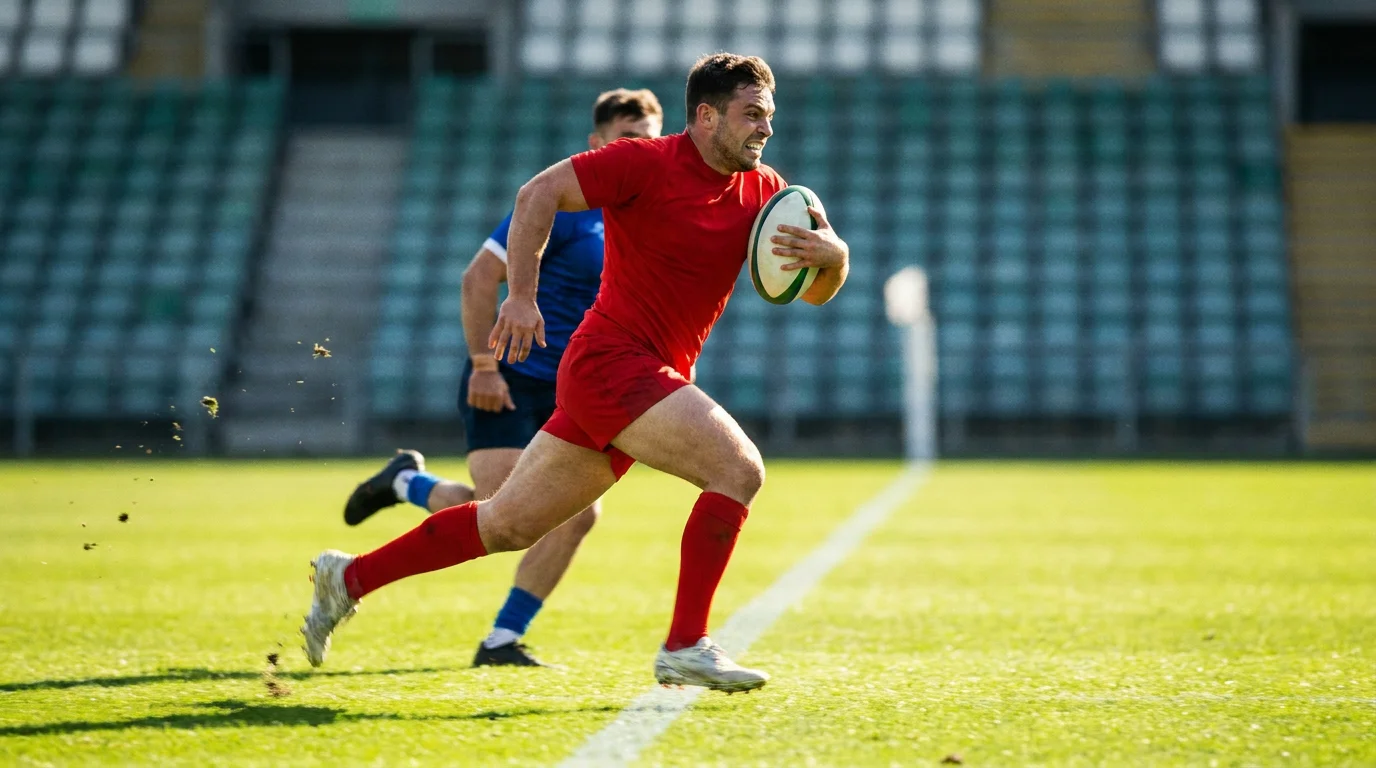
Outside backs as a group – wingers, fullbacks, outside centres – collectively account for the majority of first tries scored in modern rugby. Inside backs (fly-half, inside centre, scrum-half) score less often as first try scorers but pick up significant volume in anytime markets, since they are involved in many scoring sequences without finishing them.
Forwards present the most interesting pricing question. Locks and back rows score tries from close-range mauls, pick-and-go sequences, and turnover ball. Their first try probabilities are non-trivial, especially in matches where one side will dominate territory. A Number 8 against a smaller pack might be a legitimate 14/1 first try scorer rather than the 20/1 you see on the board, because the maul and pick-and-go are the most efficient five-metre attack tools in the game.
Tighthead and loosehead props rarely score first tries but are not impossible candidates in tight ten-metre attack from scrums. The Six Nations 2025 produced 108 tries across fifteen matches, averaging 7.2 tries per match. That tries-per-match rate matters because it tells you how many “first try” opportunities the match will generate before resolution; in a high-scoring Six Nations game, the first try lands earlier, which favours wingers and broken-play scorers over forwards waiting for a five-metre scrum.
Set-piece versus broken-play tries
Tries come from one of three rough sources: set-piece (scrum or lineout strike plays), structured phase play, and broken play (turnovers, intercepts, charge-downs, restart receipts). Each source favours different positions.
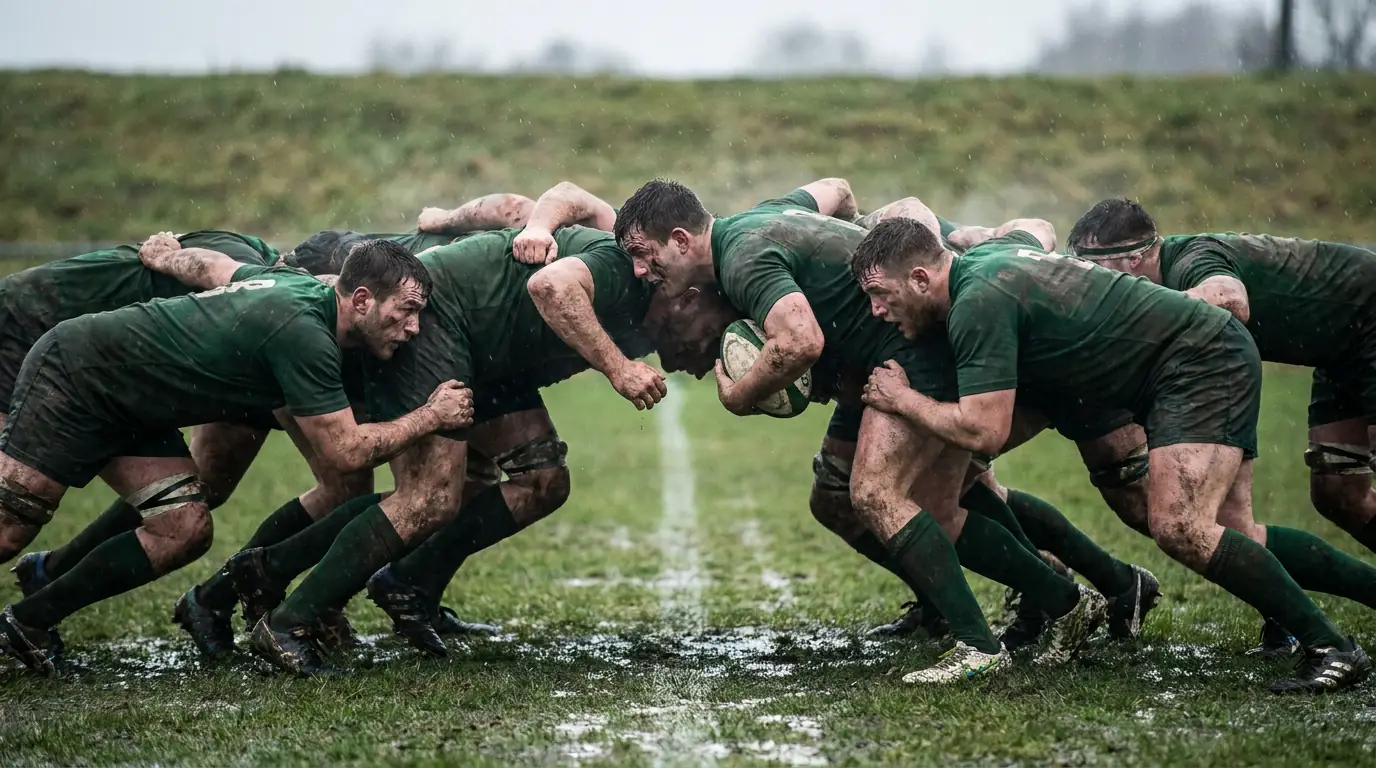
Set-piece tries near the try line favour forwards and the inside backs running off them. A driving maul ten metres out is a hooker or lock try waiting to happen. A lineout strike play on the right edge is a centre or winger try. If a team has a strong maul and they are facing an opponent that gives up penalties near the line, the bookmaker’s market on first try should be paying you for the forwards in that pack.
Broken-play tries are statistically the most volatile and favour the fastest player on either team. These are the tries where a winger you backed at 9/1 collects a charged-down kick and runs eighty metres. They are not predictable in a meaningful way, but you can read the conditions that make them more likely: high-tempo matches, looser defensive structures, and teams that play wide quickly.
Structured phase tries fall somewhere in between. They reward backline systems and the runners those systems use, which is why elite outside centres and full-backs score more first tries than their pure-finishing reputation might suggest. They are the connector positions in modern attack.
First versus anytime versus last comparison
First try scorer pays the longest odds because the player must score the opening try of the match. Anytime try scorer pays significantly shorter because the player needs to score at any point. Last try scorer pays comparable to first scorer in odds but resolves only at full-time and depends on game state – last tries often go to bench players brought on for a final-quarter assault.

The mathematics of when to choose which market depends on your view of the match. If you think a forward will score a try in a tight match where one or two tries decide the outcome, first try scorer can give you both the long odds and a real probability advantage, because the first try is statistically more likely to be a forward in low-scoring contests. In a wide-open game where seven or eight tries are likely, anytime try scorer is the rational bet, because the player has multiple opportunities and the short odds reflect that.
Last try scorer is the niche market most often abused by sharp punters. When a match is heading for a blowout, bench forwards brought on at the hour mark can be undervalued in last-scorer markets because most public money still focuses on starting wingers. The catch is that you cannot predict blowouts perfectly, and a tight finish kills your bet.
Practical checklist for team news and conditions
The night before a match, I run through a short checklist. Confirmed starting XV, including who is on the bench. Weather forecast, particularly wind direction and rainfall. Referee, because some referees award more lineout penalties near the line than others. Recent try-scoring patterns from both sides in their last three to five matches. Any change at scrum-half or hooker, because both positions are central to set-piece try delivery.

Injury news in the back three is the single most market-moving information for first try scorer. If a starting winger is downgraded to a late call or replaced, the entire board shifts. I have written separately about how team news flows through to rugby odds, and the principles apply most sharply to try scorer markets.
Finally, check the bookmaker’s stated rules for what counts as a “first try”. Penalty tries, disallowed tries on TMO review, and tries scored during the warm-down of stoppage time can all be treated differently across operators. Knowing your book’s rule book is unglamorous but it has settled more disputes than it has caused.
