
Player Injuries and Rugby Odds: How Team News Moves the Line
 Available in US
The most lucrative single bet I have placed on a Six Nations match was the under on tries in a fixture where the starting fly-half was downgraded from the matchday squad about ninety minutes before kick-off. The market moved aggressively on the news but not aggressively enough; the replacement at fly-half was a kicking specialist with no running game, and the match finished with three tries on a totals line that had only just dropped from 8.5 to 7.5. Reading injury news fast enough to bet before the market fully integrates it is one of the few genuinely repeatable edges available to British rugby punters.
Player injuries reshape rugby pricing more dramatically than most casual bettors realise. Some positions matter much more than others. Some teams are more injury-fragile than others. Some news sources are more reliable than others. Understanding the hierarchy of all three is the difference between consistently catching the move and consistently missing it.
This guide covers which positions move lines the most, the late team announcement window, how to evaluate injury news sources, how injuries flow into try-scorer markets, and what to do about multi-week injury clusters.
Which positions move lines the most
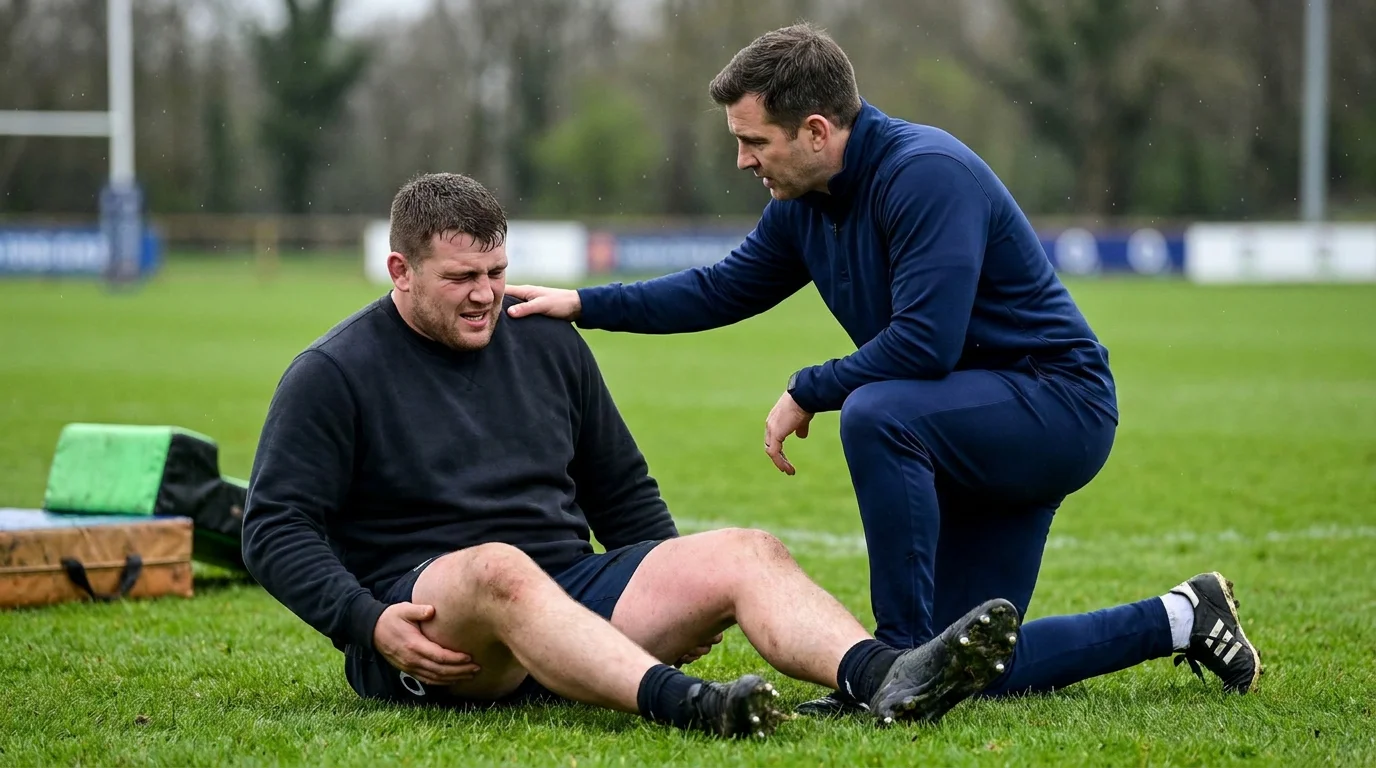
The single most market-moving injury position in modern rugby is fly-half. The fly-half controls the kicking strategy, the territorial game, and the attacking shape. A confirmed starting fly-half injury can shift the handicap line by two or three points and the tries totals line by a full try. The reason is that no other position is as structurally central to how a team plays.
Scrum-half is the second-biggest single position injury. Scrum-halves dictate the pace of attack and the variety of plays from the breakdown. A specialist injury at scrum-half can compress an attacking team’s tempo and shift the tries totals down by half a try. The market integrates this but sometimes slowly, particularly when the replacement scrum-half is a known like-for-like swap.
The back row is the third tier of impact. A confirmed injury to a star openside flanker or a dominant Number 8 affects breakdown competition and turnover production. The handicap usually moves by half a point to a point. Loose forwards as a group matter less than individual specialists, but a multiple-injury back row can shift lines materially.
Centre injuries are unevenly market-moving. A defensive midfield organiser injury affects the team’s defensive shape more than the attack; an attacking midfielder injury affects try-scoring shape more than overall outcome. The market reads these unevenly, with attacking centre injuries often underpriced relative to their impact.
Front row injuries move lines less than backline injuries in most cases because front rows have clear replacement depth and the scrum is regulated heavily enough to limit individual impact. The exception is when a unique scrummager (a destructive tighthead, for example) is the difference-maker; in those cases the line can move a point on the handicap.
The 2024/25 Gallagher Premiership Final between Bath and Leicester Tigers averaged 973,000 viewers on TNT Sports and ITV1 with a cumulative peak of 1.26 million, which gives a sense of how much money flows around top-tier Premiership matches and how quickly lines respond to confirmed team news in fixtures of that scale.
Late team announcement window
Most professional rugby teams announce their starting XV between 24 and 48 hours before kick-off. The announcement is a market-moving event in every major fixture. Lines tighten or loosen based on which players are in, out, or on the bench compared to the bookmaker’s pre-announcement expectations.

The window between team announcement and kick-off is where the cleanest pricing exists. Pre-announcement prices are anchored to the bookmaker’s expected XVs; post-announcement prices reflect confirmed reality. The shift between the two is sometimes immediate and sometimes gradual, depending on how surprising the team news is and how aggressively the market reacts.
For the most market-moving fixtures (Six Nations, Premiership finals, European knockout matches), the team announcement is closely watched and the line moves within minutes. For lower-profile fixtures (mid-season Premiership games, European pool matches), the line can take hours to fully reflect the announcement. The slower-moving lines are where the alert bettor catches the move.
Some teams release team news in stages: starting XV on Thursday, final bench on Friday, late changes on Saturday morning. The final-stage changes are the most market-moving because they confirm or override the earlier announcement. A starting fly-half listed as a doubt on Thursday and confirmed out on Saturday morning produces a much bigger line move than a clean Thursday confirmation.
The 2024/25 Premiership season saw average TV audiences rise around ten per cent year on year, and Premiership fixtures in the Saturday slot following Premier League football enjoyed a forty-seven per cent boost to average audience. Those audience figures translate directly to betting volumes, which means the lines on Premiership Saturday fixtures move faster on team news than the lines on mid-week Wednesday fixtures.
Injury news sources and reliability
Not all injury news is equal. Official club statements are the gold standard but often the slowest. Beat journalists covering specific clubs (the Bath correspondent, the Leicester correspondent, the Munster correspondent) are usually faster and reliable. Rumours on social media are fastest but most unreliable. The hierarchy from slow-and-reliable to fast-and-risky maps directly to how confidently you can bet on the news.

I track a short list of beat journalists for each Premiership club, the URC provinces, and the home nations. When one of these journalists tweets or reports an injury in the 48 hours before kick-off, the news is usually reliable enough to bet on. When the news first appears on a fan site or anonymous social media account, I wait for confirmation before staking.
The bookmaker integrates injury news at varying speeds depending on the source. Confirmed beat-journalist news is usually absorbed within minutes. Fan rumours are sometimes ignored entirely. The gap between when the bettor knows reliable news and when the market integrates it is the window for profitable action, and the window can be ten minutes or two hours depending on the fixture’s profile.
Form analysis is the complement to injury analysis. A team that has been performing strongly may absorb a key injury better than the raw line move suggests, while a team already underperforming can collapse further when a key player is added to the missing list. My guide to reading a Premiership form guide for betting covers how to weight team form against injury news for sharper handicap and totals reads.
Injuries and try scorer markets
Injury news affects try scorer markets more dramatically than most other markets. The first try scorer board reshuffles entirely when a starting winger is replaced by a bench player, when a fly-half kicks differently from his replacement, or when a centre’s attacking lines change to accommodate a different partner.
A confirmed starting winger injury moves the first try scorer board within minutes. The replacement winger usually shortens from a long price to a mid-priced option, and the entire backs band on shirt-number markets shifts to reflect the changed attacking shape. Backing the replacement winger immediately on confirmed news has been profitable when the replacement is a strong club-form finisher whose pricing has not yet caught up with the news.
Anytime try scorer markets shift less dramatically than first try scorer markets because the named player has multiple opportunities across the match. The shift on anytime markets is usually a half-point to a point of fractional adjustment for the replacement player, while the original starter is voided from the market or settled as a non-runner depending on the operator’s rules.
Last try scorer markets show the smallest immediate shift on team announcement news because the last try scorer depends heavily on game state and substitution patterns rather than initial selection. But a confirmed injury can affect bench composition, which in turn affects who is on the field at minute 75 when last tries cluster. Reading bench depth alongside starting XV news gives the cleanest read on last-try markets.
Multi-week injury clusters
Some injuries persist across multiple weeks or signal broader squad fragility. A club losing three back rowers in a month is in different shape than a club losing one fly-half for one match. The cumulative effect on the club’s expected performance over a multi-week stretch is larger than any single match’s line move suggests.

Reading injury clusters requires tracking each club’s medical bulletins across the season. A club with a thin squad and a stretched injury list often experiences a performance dip that lasts for several matches as replacement players adjust to first-team pace. Backing the unders on such clubs’ totals and supporting the opposing handicap covers can produce a multi-week pattern of profitable bets.
Conversely, a club returning multiple players from injury enters a positive phase. A returning star fly-half plus a returning starting centre plus a returning lock can lift the club from a poor recent stretch into a credible win-side play. The market integrates returning players but often slowly, and the early matches of a returning-player run can offer value on the team’s improved totals and handicap covers.
The discipline I try to maintain is to read injury news in the context of the squad’s overall shape rather than as isolated events. A single confirmed injury matters, but a cluster of injuries or a returning cluster matters more, and the market reads cumulative news less accurately than isolated news. Tracking each club’s medical situation across the season is unglamorous work, but it has been the single most reliable source of edge in my Premiership and URC betting over the past three seasons.
