
Over/Under Tries in Rugby: Reading Total Lines and Team Totals
 Available in US
A bookmaker friend once told me that the tries total market is where careful punters quietly make a living. Match-winner attracts the public, handicap attracts the analytical types, but tries totals sit in a space where the line moves only when sharp money pushes it. I have spent enough Saturday afternoons watching tries lines tick up half a try after a forecast changes to know he was right. The market is honest, the data is rich, and the mental model you need is simpler than for handicap.
The catch is that “tries totals” mean different things in different tournaments. A 6.5 try line in a Six Nations match is a completely different question to a 6.5 try line in a Super League round. Carrying a single mental anchor across codes is the easiest way to lose this market.
This guide covers how bookmakers set tries totals, what the per-tournament averages actually are, when team totals beat match totals, how weather and discipline push the line, and how the alternative total points market relates to its tries-only cousin.
How bookmakers set tries totals
The tries total line is built from three inputs: each team’s average tries scored per match recently, each team’s average tries conceded recently, and a venue and condition adjustment. The bookmaker takes a weighted recent sample (usually the last five to eight matches per team, weighted toward more recent games), calculates an expected tries figure for each side, sums them, and sets the line.
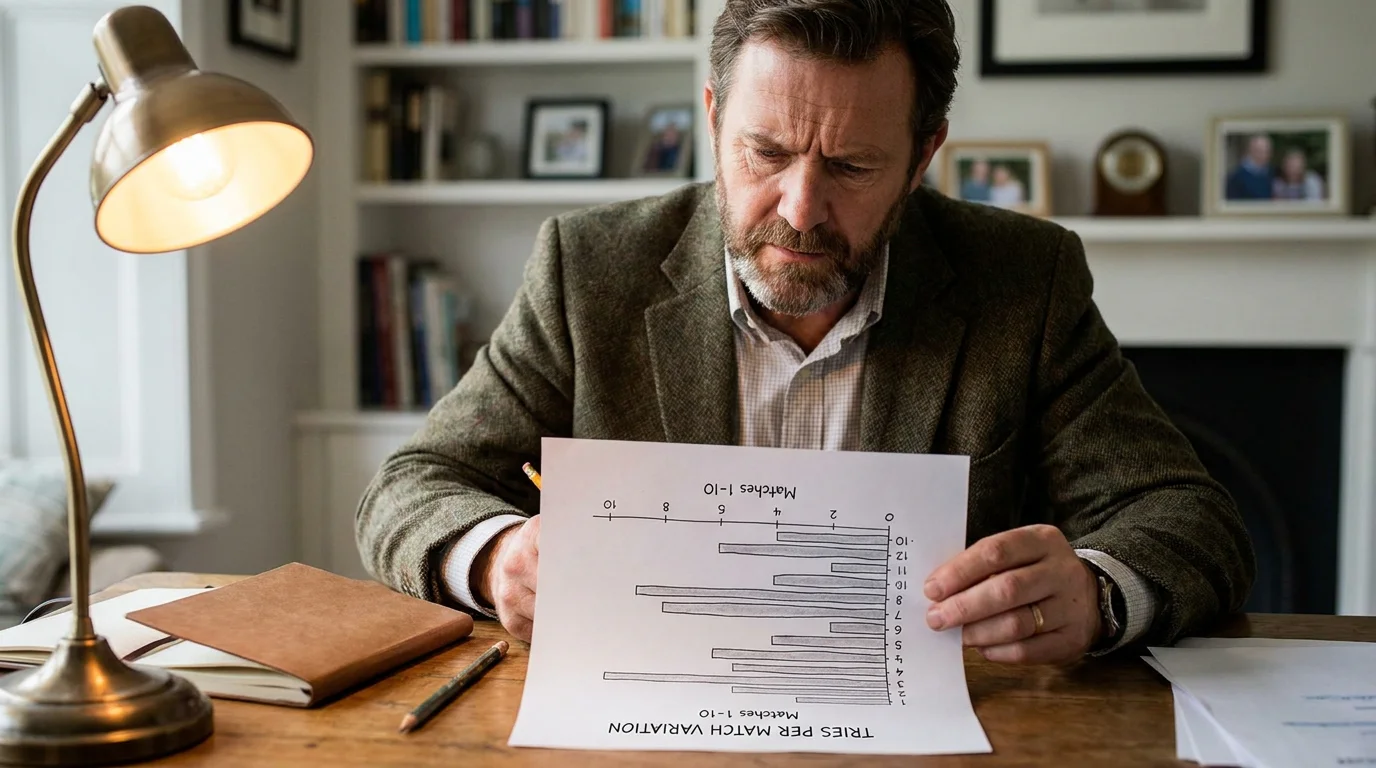
The half-point convention exists for the same reason it does in handicap markets: to remove the possibility of a push. A line of 6.5 means there must be either six tries (under wins) or seven (over wins). A line of 7 means seven tries is a push and your stake comes back. Some books offer split lines (6.5/7) where half your stake plays each number.
Pricing around the line is usually balanced. Over and under will both sit at around 10/11 or evens with a small margin to the bookmaker. The margin in tries totals is typically tighter than in first try scorer because the market attracts sharper money, but it remains wider than match-winner because tries totals are inherently more variable.
The most important thing to remember is that the line is a median estimate. The bookmaker is not predicting exactly seven tries. They are saying there is roughly a 50 per cent chance of seven or fewer and 50 per cent chance of seven or more. Your job is to estimate which side of that line the true probability sits on, not to guess the precise tries count.
Tries per match averages by tournament
Anchor numbers help. The Six Nations 2025 produced 108 tries across fifteen matches, an average of 7.2 tries per match. That is a high Six Nations average historically – recent tournaments have ranged from around five to a touch above seven, depending on weather and competitive balance. Most Six Nations tries totals lines sit between 5.5 and 8.5 depending on the fixture, with Italy-fixtures pushing higher and tight English-Welsh-style contests pushing lower.

The Premiership produces a similar tries average, typically between six and eight per match across a season. Premiership tries totals usually sit between 6.5 and 8.5. Some clubs run averages noticeably above or below the league mean; matching their attacking and defensive profiles against the opposition is the first thing to do on any tries total bet.
Super League is its own world. A typical Betfred Super League match produces between seven and ten tries, with the rapid six-tackle sets generating high attacking volume. Super League tries totals lines usually open between 8.5 and 10.5. Carrying a Six Nations mindset (treat 6.5 as the baseline) into Super League will leave you under-betting overs and losing money.
European competition presents tournament-specific patterns. Champions Cup pool matches at home for top sides tend to push higher; away days for English clubs in France tend to push lower. Challenge Cup matches are often wildly variable because squad rotation distorts both attacks and defences.
Team totals versus match totals
Most bookmakers offer team totals alongside match totals. A team total over 3.5 for England in a Six Nations match might be priced at 10/11; the corresponding under 3.5 for England at evens. Team totals are extremely useful when you have a directional view on which side will dominate possession.

The reason to prefer team totals over match totals is asymmetric information. The match total folds together your view on both teams’ attacking capacity. The team total isolates your view on one side, which is often where your analytical edge actually lives. If you believe Wigan’s attack is undervalued but you have no strong view on St Helens’ attack, betting Wigan team total over 4.5 is sharper than betting match total over 9.5.
Team totals also let you exploit defensive mispricing. If a team’s defensive record looks worse than its public reputation, the opposition team total over is often paying generously. This is particularly true in fixtures where a wounded side is the underdog: the market often shortens the opposition match total but lengthens the underdog’s team total below their true scoring rate.
The trap to avoid with team totals is correlation in your own bets. Betting both team’s overs in the same match is essentially betting the match total over, and you should price it that way rather than as two separate bets at independent odds.
Weather and discipline effects on tries
Wet weather suppresses tries. The mechanism is simple: a wet ball cannot be passed accurately, defensive systems become more reliable than attacking systems, and the kicking game replaces the running game. A line of 7.5 in a forecast of heavy rain at Murrayfield is a different bet from the same line in dry conditions. The market usually moves the line down by half to a full try ahead of bad weather, but not always enough, and the under is often the right play once the forecast firms up.
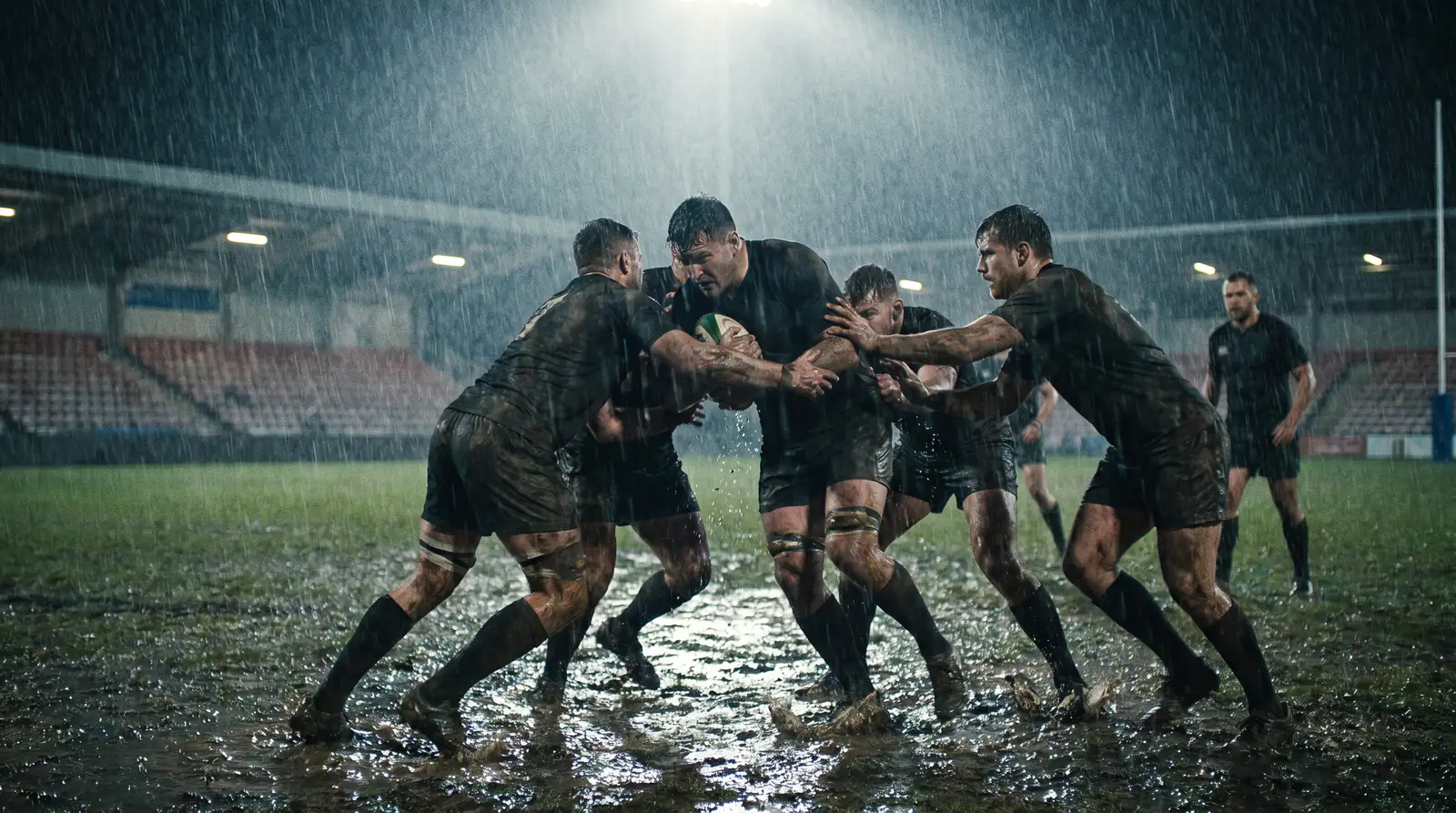
Wind is more nuanced. A strong steady wind helps one side play with field position and territory, which can either suppress tries (kicking duel) or unlock them (the team kicking with the wind pins the opposition deep and pounces). Reading wind requires knowing the venue and the prevailing direction; once you know both, you can sometimes see lines that have not adjusted to the forecast.
Discipline drives tries less obviously. A high-penalty count usually means more kicks at posts (which are not tries) and fewer attacking phases, but it also produces more yellow cards. A yellow card to either side opens the floodgates for tries against the fourteen-player team. Referee selection matters: the strict whistles produce penalty-heavy, try-suppressing games; the more permissive referees let phase play continue and tries flow.
The mechanics of weather and discipline interactions are detailed in my full breakdown of how weather moves rugby betting lines, which expands on when to act on a forecast and when the bookmaker has already moved.
Alternative total points line
The total points market sits alongside the tries market on most boards. It uses the same logic but bundles in penalties, conversions, and drop goals. A total points line of 49.5 in a Six Nations match assumes roughly seven tries with full conversion success and a couple of kicks. The conversion rate matters: an 80 per cent conversion rate (a reasonable Six Nations baseline) means each try is worth seven points on average; a poor kicking day drops that to six.
The relationship between tries totals and points totals is roughly that one extra try equals about seven points. If the tries total is 7.5 and the points total is 49.5, you can sense-check the lines against each other. When they diverge from a clean 1:7 ratio, the bookmaker is implying something about the penalty kick volume or drop goal probability.
I sometimes find value in betting tries over but points under, or vice versa, in matches where I expect lots of tries from short range (low conversion success) or few tries but lots of penalty kicks (high points relative to tries). These cross-market plays require more analytical work but they can produce edges that single-market bets cannot.
One last note: be careful with bookmaker rules around stoppage time, sin-bin tries, and TMO overturns. Each book treats edge cases differently, and a try awarded in the eighty-third minute that pushes you over the line can also be ruled out for forward pass and pull you under. Read the rules once and remember them.
